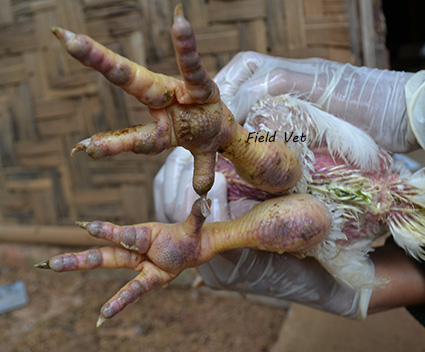
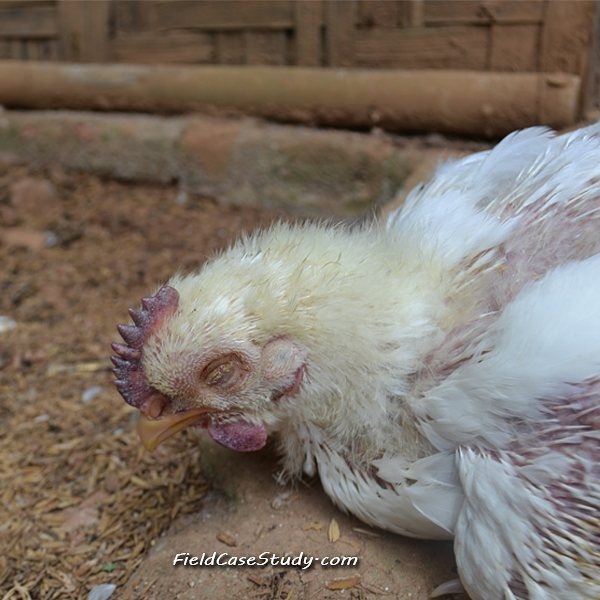
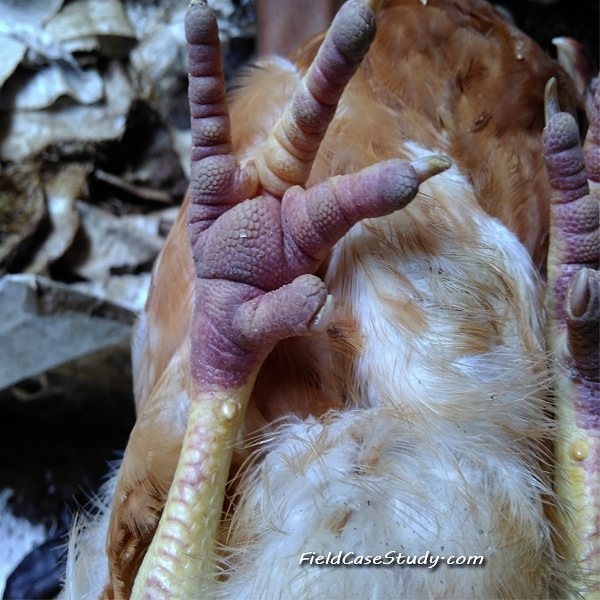
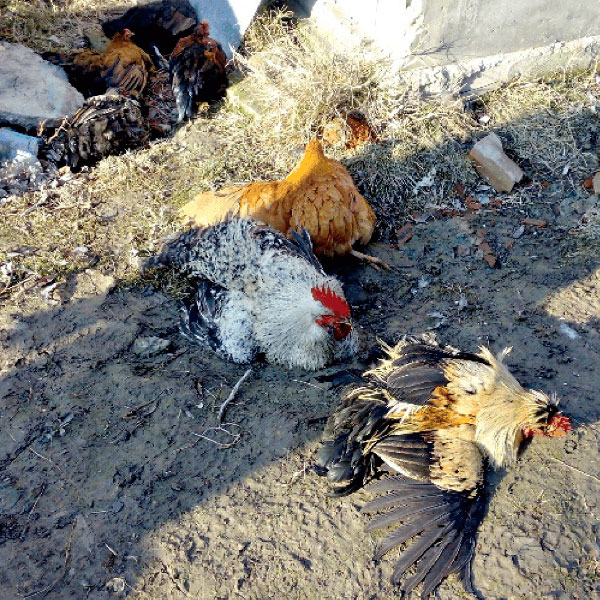
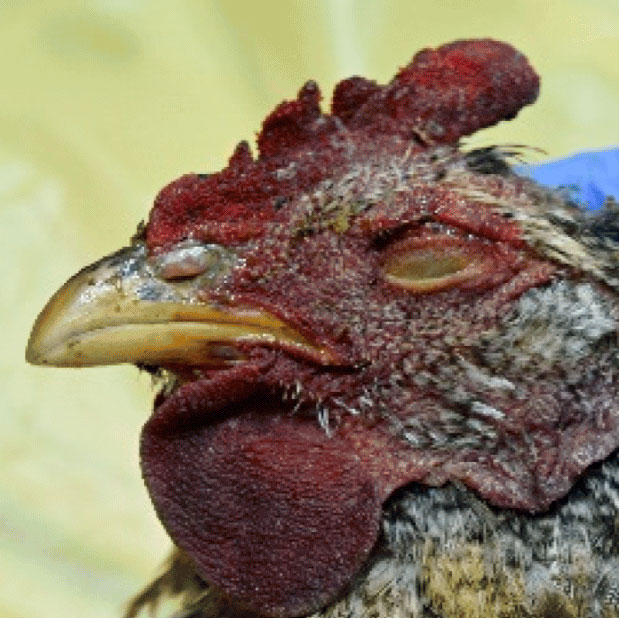
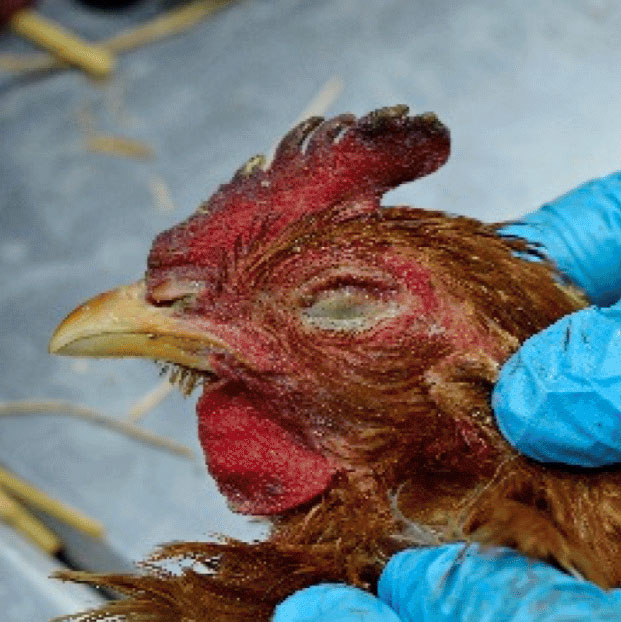
Avian influenza (AI) is a highly contagious viral disease affecting both wild and domestic bird populations worldwide. The causative viruses are categorized as either low pathogenic avian influenza (LPAI) or highly pathogenic avian influenza (HPAI), based on the severity of disease they cause in chickens. LPAI strains typically result in milder illness, while HPAI strains lead to severe, often systemic infections. Once a bird is infected, the virus can replicate in multiple organ systems, including the respiratory, gastrointestinal, renal, and reproductive tracts.
Clinical Signs
Clinical presentation varies widely and is influenced by factors such as the bird’s age, sex, immune status, the strain of virus, presence of secondary infections, and the tissues affected.
- LPAI: In chickens, LPAI infections most commonly involve the respiratory tract, particularly the sinuses. Inflammation may be catarrhal, fibrinous, serofibrinous, mucopurulent, or fibrinopurulent, often with secondary bacterial involvement. Affected birds may develop swollen infraorbital sinuses with nasal discharge ranging from clear mucus to thick, pus-like material. Laying hens may produce abnormal eggs that are misshapen, fragile, or lack normal pigmentation, and may be at risk for complications such as egg yolk peritonitis.
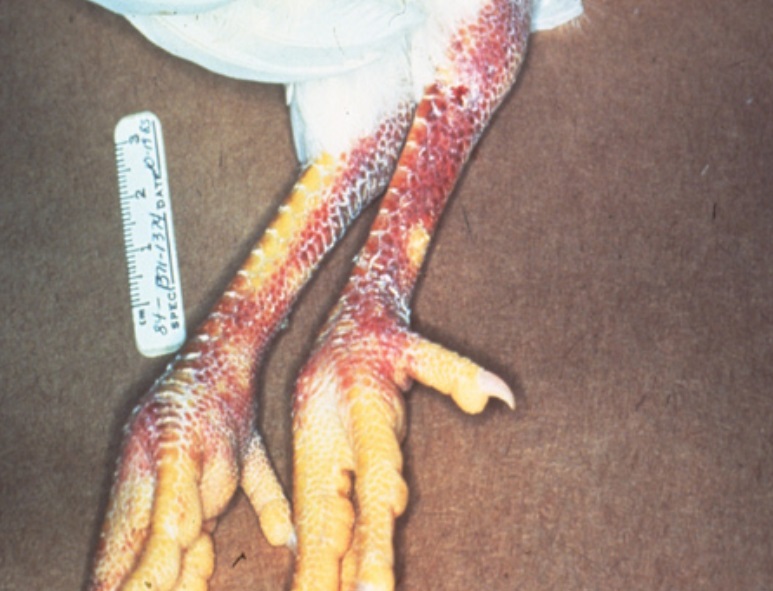
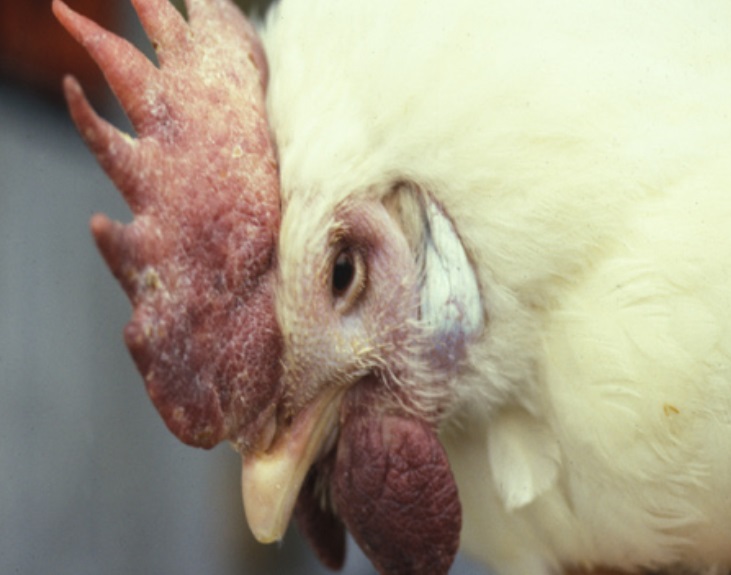
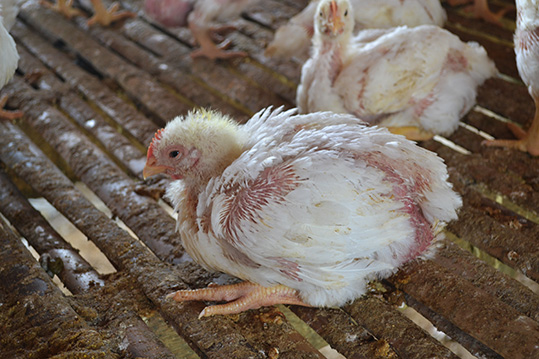
- HPAI: HPAI infections typically cause widespread damage to multiple organ systems, including the internal organs, cardiovascular system, and nervous system. Clinical signs vary depending on the extent and location of organ damage. Compared to LPAI, respiratory signs may be less prominent. Neurological signs are common and can include tremors of the head and neck, wry neck, inability to stand, and abnormal head positioning. Affected birds are often lethargic, show decreased activity, and have reduced appetite.
Transmission
The virus is shed in respiratory secretions (from the nares, mouth, and eyes) as well as in feces, contaminating the surrounding environment. Transmission occurs through direct contact with infected birds or indirectly via contaminated surfaces, equipment, or materials (fomites), as well as through aerosolized droplets.
Wild waterfowl—particularly species such as mallard ducks—serve as the primary natural reservoirs of influenza A viruses. These birds often carry LPAI strains without showing signs of illness and can shed large quantities of virus in their feces, contaminating water sources. As a result, they are a common source of introduction of the virus into domestic flocks.
Diagnosis
Diagnosis of avian influenza is confirmed through laboratory testing. Samples are typically collected via swabs from the oropharynx or cloaca. Virus isolation remains the gold standard for confirming infection, though other diagnostic methods are also commonly used.
Incubation Period
The incubation period generally ranges from 3–5 days, but can vary depending on factors such as viral dose, route of exposure, species affected, and the sensitivity of clinical detection.