The large roundworm,
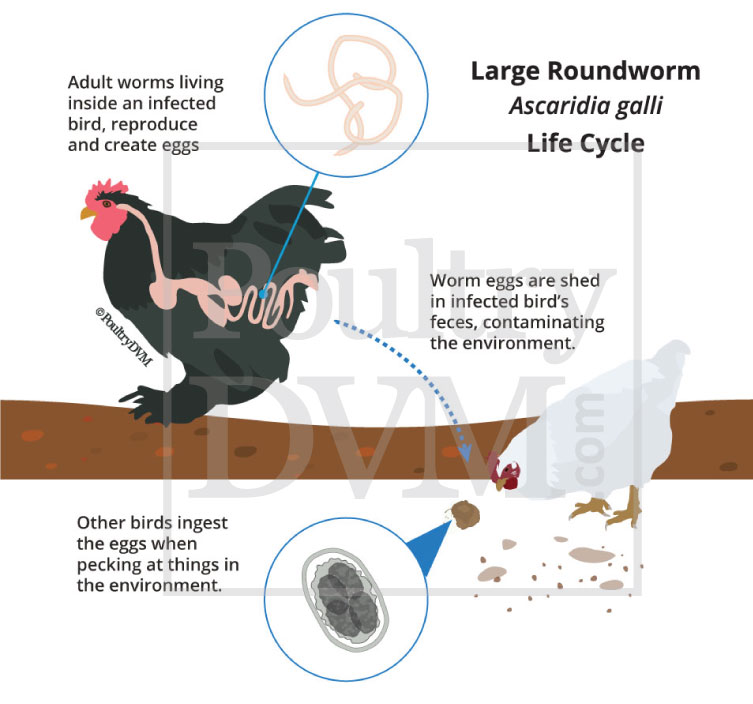
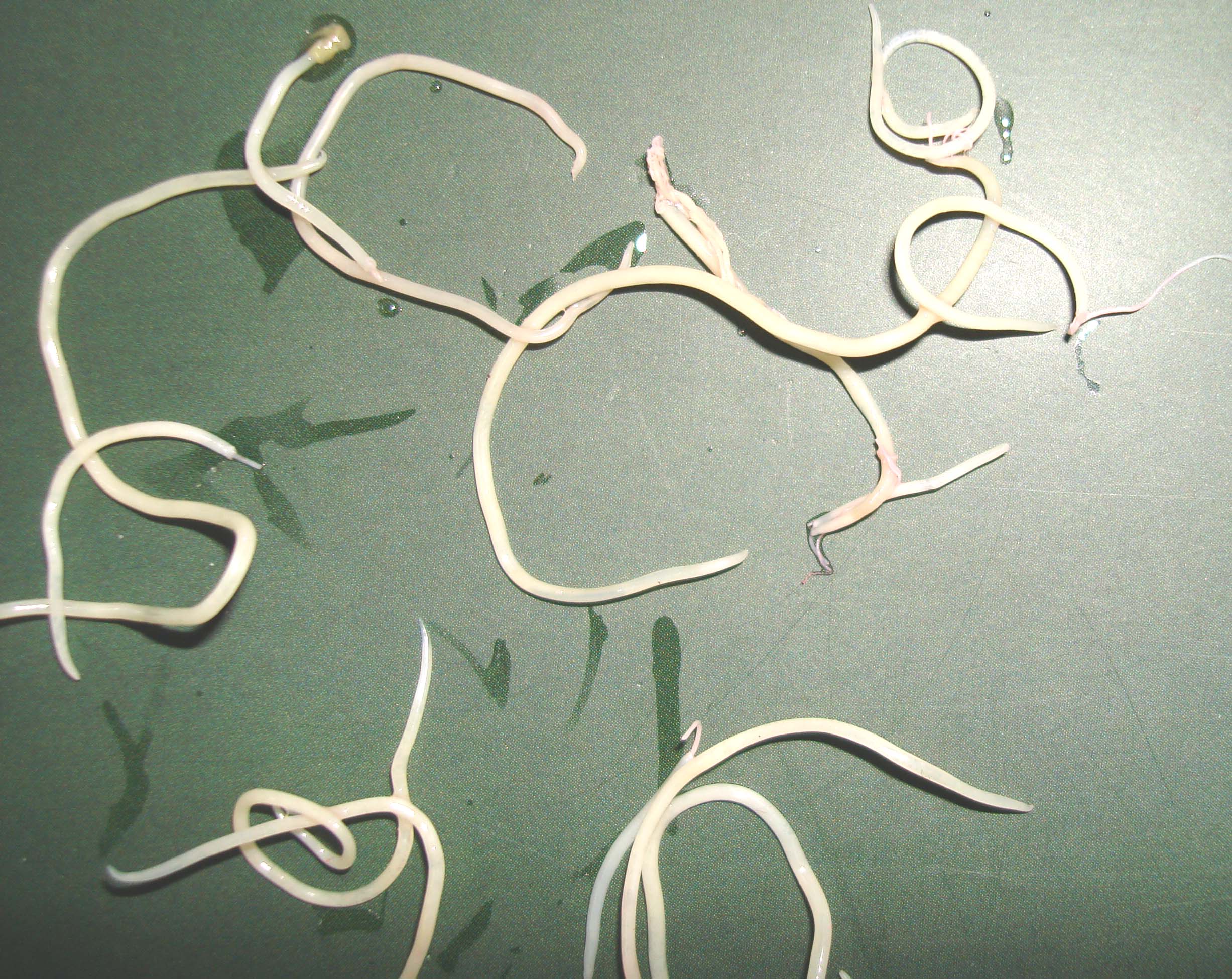
Ascaridia galli is the most common intestinal parasite found in backyard and free range chicken flocks worldwide. It is a yellowish white, thick worm which can grow up to 115 mm (4.5 inches) in length. It lives freely inside the chicken's small intestine. There, it reproduces and lays eggs, which are passed out of the chicken in their feces. Occasionally, adult worms will migrate into other parts of the chicken's body, such as the cloaca, oviduct, body cavity, esophagus, crop, or gizzard. When in the oviduct, they can sometimes get trapped inside a newly formed egg.
The impact roundworms have on the chicken depends on several factors:
- Age: Chickens older than 3 months of age have considerably more resistance to infection with A. galli than younger birds.
- Body Size: Heavier chicken breeds are more resistant compared to lighter breeds. Lighter birds tend to have higher worm burdens and more severe infection intensity.
- Overall Health Status: Healthy chickens with a good immune system tend to be more resistant to A. galli.
- Diet: Chickens receiving balanced diets high in vitamins A and B (complex) increase their resistance to A. galli.
In severe infections where chickens have large numbers of
A. galli present, it can lead to partial to complete intestinal blockage. Failure to control roundworm infections can compromise the bird's health by increasing susceptibility to other diseases in highly infected birds.
How do chickens get roundworms?
A. galli has a direct life cycle. This means that chickens are infected by eating
A. galli eggs, that are passed out of another chicken in their feces, contaminating the surrounding environment, feed, or water source. When another chicken ingests the infective
A. galli eggs, they hatch in their proventriculus or the small intestine. It will take 28-30 days for
A. galli to mature into adults. The pre-patent period (when birds start shedding the worm eggs in their feces) after infection is 5-8 weeks.
Since
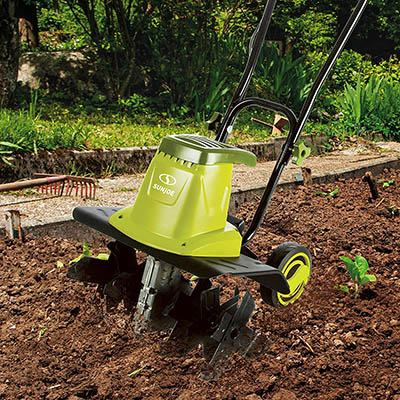
A. galli eggs are very resistant, they can survive outside in the soil for extended periods of time. In deep litter systems,
A. galli eggs can remain infective for years. Under optimum conditions of temperature and moisture (which is 25° C (77°F)),
A. galli eggs can survive in the environment for up to 8 months (160 weeks) and become infective after passing through feces in 1-28 days. 2 to 3% of
A. galli eggs remained viable and infective for up to 2 yr in the pasture.
A. galli eggs can hatch anywhere between 17.5°C (63.5° F) to 34°C (93.2°F).
Clinical Signs of Roundworms in Chickens
Clinical signs of roundworms in chickens will vary depending on the severity of the infection. The symptoms will be more severe in younger chickens, less than 3 months of age. Signs of roundworm infection in chickens typically include paleness (of the face, comb and wattles), ruffled feathers, altered hormone levels, weight loss with a prominent keel and reduced body fat, decreased appetite, depression, and diarrhea with increased white urates. Birds will also have a decreased activity level and spend less time pecking at the ground. Hens may spend more time in nests, not associated with broodiness. There may be more frequent bullying among flock members.
Treatment of Roundworms in Chickens
Fenbendazole is the only deworming product that is currently approved for treatment and control of roundworms (
Ascaridia spp.) and cecal worms (
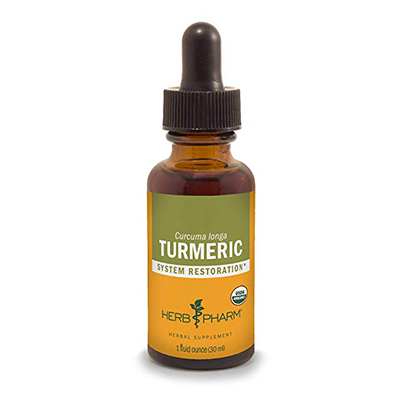
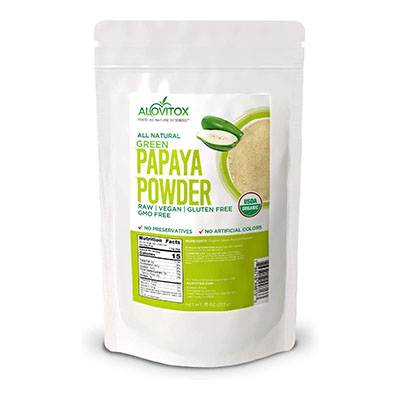
Heterakis spp.) in chickens in the United States. There are several herbal supplements which have anthelmintic properties against roundworms which may beneficial for preventative purposes.