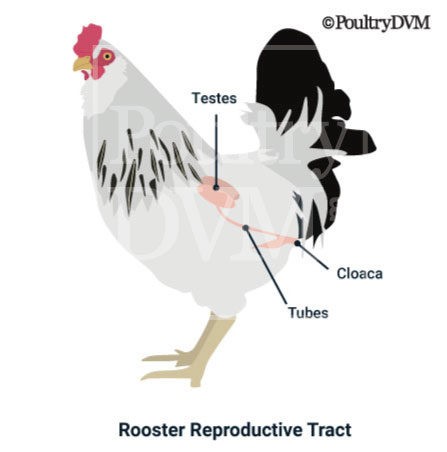
The reproductive system of a rooster includes the testes, epididymis, ductus deferens (vas deferens), papilla, and cloaca. Unlike male mammals, roosters do not have a penis. During mating, sperm is expelled through the papilla—a small, nipple-like structure located within the cloaca.
Roosters have two internal testes positioned along the backbone, just above the kidneys. Sperm travels from the epididymis through the ductus deferens and is ultimately released into the cloaca.
Types of Reproductive Infections
Reproductive infections in roosters may occur as part of a systemic illness spread through the bloodstream or as an ascending infection entering through the cloaca. Common conditions include:
- Orchitis: Inflammation of the testes. This may be interstitial, intratubular, or necrotizing, and often affects one testicle, frequently secondary to epididymitis.
- Epididymitis: Inflammation of the epididymis.
- Deferentitis: Inflammation of the ductus deferens.
- Epididymo-orchitis: Inflammation involving both the testes and epididymis.
Common Causes
The most frequently identified pathogens include:
- Bacteria: Escherichia coli, Salmonella spp., Staphylococcus aureus, and Pasteurella multocida.
- Viruses: Infectious bronchitis virus
If multiple hens in a flock are affected by reproductive conditions such as salpingitis or oophoritis, evaluation of the rooster(s) for reproductive infection should be considered.
Clinical signs
Roosters with reproductive infections may exhibit:
- Weight loss and dehydration
- Reduced body condition and fat stores
- Infertility
- Cloacal swelling or distention
- Accumulation of urates or fecal material around the vent (“pasty vent”)
- Behavioral changes
Infections may remain localized to the reproductive tract or spread to nearby organs, air sacs, or the coelomic cavity, potentially leading to coelomitis.
Diagnosis
- Complete blood count (CBC): May reveal leukocytosis and heterophilia, particularly in cases of orchitis.
- Radiography: Can show increased soft tissue opacity in the dorsal coelom near the kidneys, suggesting testicular enlargement.
- Ultrasonography: More sensitive than radiographs for evaluating the size, shape, and consistency of the testes.
Treatment
Treatment typically involves initiating broad-spectrum antibiotics while awaiting results from bacterial culture and sensitivity testing. Affected roosters should be isolated from hens during treatment to prevent transmission and allow for recovery.