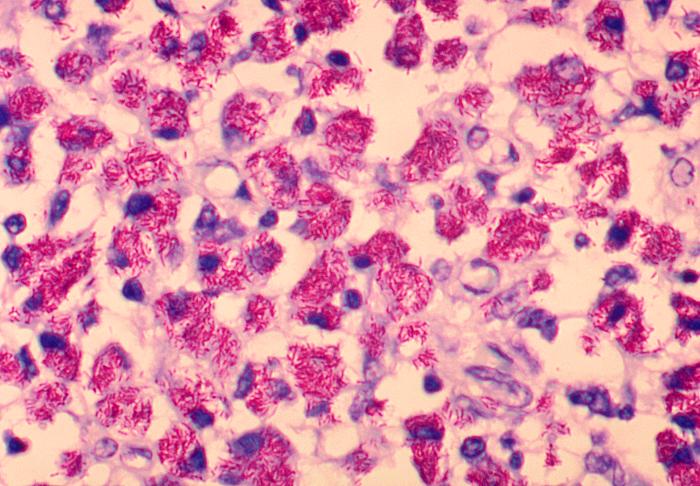
Mycobacterium spp
Mycobacterium avium is the causative agent of avian tuberculosis. It is an aerobic, non spore-forming, rod shaped bacteria that are weakly Gram-positive.
Survival in the Environment: M. avium is frequently found throughout the environment, especially soil. It is highly resistant to environmental challenges and can survive in the soil for up to 4 years. The organism is resistant to high and low temperatures, dryness, pH changes, and many commonly used disinfectants. However, the unprotected organism is killed by direct sunlight.
Hosts: Wild birds, pigs, and some mammals may also act as significant reservoirs of infection, and spread M. avium to backyard poultry flocks. Rodents such as mice and rats have also been known to act as mechanical carriers, and transmit the disease to poultry flocks.
References
- Matos, Sofia, Isabel Portugal, and João Perdigão. The Mycobacterium avium complex: genomics, disease, and beyond Microorganisms 13.10 (2025)
- Schmidt, Volker, et al.. Mycobacteriosis in various pet and wild birds from Germany: pathological findings, coinfections, and characterization of causative mycobacteria Microbiology spectrum 10.4 (2022)
- . Mycobacterium Virulence factor database (VFDB) (2019)
- Saif, Y. M Diseases of poultry. John Wiley & Sons (2009)